Road debris causes an average of 53,000 motor vehicle crashes, 5,500 injuries, and 72 deaths every year in the United States, according to the AAA Foundation for Traffic Safety. About two-thirds of these crashes involve items that fell from vehicles due to unsecured loads.
Flatbed truck accidents are among the most hazardous because these open trailers carry exposed cargo, ranging from steel beams to construction equipment, with only straps and chains holding the cargo in place. When something goes wrong, the results are often catastrophic for everyone on the road.
If you or someone you love was hurt in a crash involving a flatbed truck, an experienced truck accident lawyer can help you explore your legal options and pursue fair compensation for your injuries.
Schedule a Free Case Evaluation
Key Takeaways for Flatbed Truck Crash Cases
- Two-thirds of road debris crashes involve items that fell from vehicles, and flatbeds are among the most common sources.
- Unsecured or shifting loads are a leading cause of flatbed crashes, often sending heavy objects into traffic or causing the truck to roll over.
- A single loose strap on a 20,000-pound steel beam can launch a deadly projectile traveling at highway speed.
- Federal law requires truckers to inspect their cargo every 150 miles or three hours, yet many skip these checks entirely.
- The driver is rarely the only party at fault; trucking companies, cargo loaders, and equipment manufacturers may all share liability.
What Makes Flatbed Trucks Different From Other Commercial Vehicles?
Flatbed trucks haul cargo that other trucks simply cannot carry. Their open design allows them to transport oversized, heavy, or irregularly shaped items that would never fit inside an enclosed trailer.
The open-bed design creates unique risks
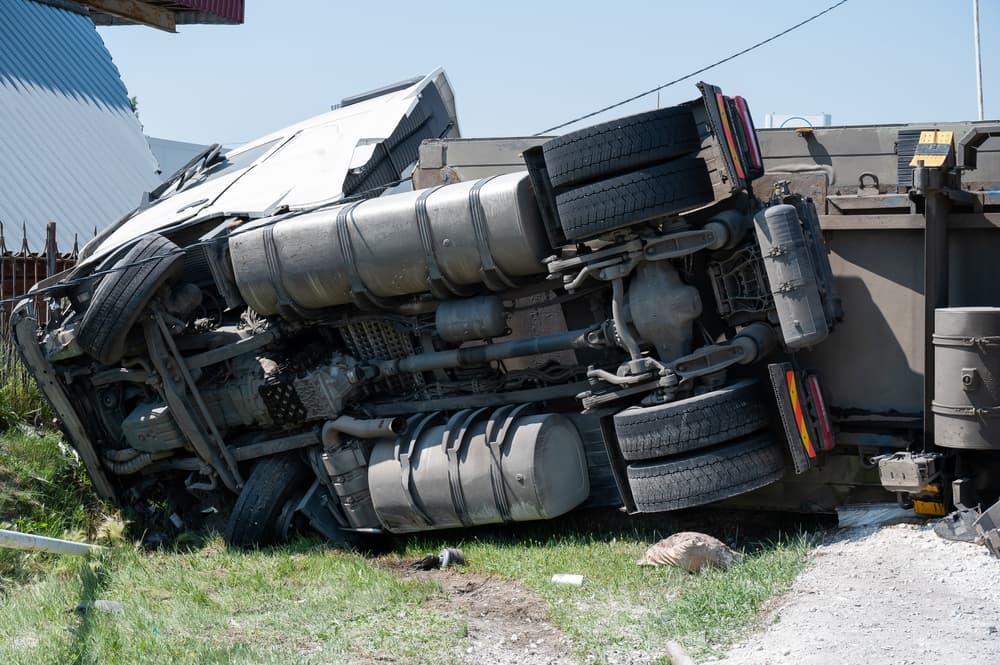
Unlike box trucks or enclosed trailers, flatbeds have no walls or roof to contain their cargo. This design makes them ideal for hauling construction materials, machinery, lumber, and vehicles. It also means there is nothing to catch loose items if a strap fails or a load shifts.
The Federal Motor Carrier Safety Administration (FMCSA) sets strict cargo securement rules under 49 CFR Part 393. These regulations require that all tiedowns have a combined working load limit equal to at least half the cargo's weight. They also require specific securement methods for different types of cargo, including lumber, metal coils, heavy machinery, and concrete pipe.
Common cargo types increase danger levels
Flatbed trucks frequently haul materials that become deadly projectiles in a crash. The types of cargo these trucks carry include:
- Steel beams, pipes, and rebar used in construction
- Heavy machinery and industrial equipment
- Lumber, plywood, and building materials
- Vehicles being transported to dealerships or auctions
- Concrete barriers and prefabricated structures
Each of these materials requires specific securement techniques. A single mistake, such as using too few tiedowns, failing to check tension during transit, or ignoring weight distribution, can lead to a serious accident.
How Do Most Flatbed Truck Accidents Happen?
Flatbed crashes occur for many reasons, but specific causes appear to occur far more frequently than others. Understanding these patterns helps explain why these accidents happen and who may be responsible.
Each of these causes points to negligence—someone failed to do what safety regulations and the law required. Proving that failure is the foundation of any legal claim after a flatbed crash. Common causes of flatbed truck crashes include:
Improper cargo securement
This is the most common and preventable cause of flatbed accidents. When cargo is not properly tied down, it may shift during transit, fall onto the roadway, or cause the entire truck to become unstable.
FMCSA regulations require drivers to inspect their cargo and securement devices within the first 50 miles of a trip and every 150 miles or three hours afterward. Many crashes happen because drivers skip these inspections or fail to notice problems before they become dangerous.
Warning signs of improper securement include loose straps, missing tiedowns, unbalanced weight distribution, and cargo that extends beyond the trailer's edges without proper flagging. Any of these issues may lead to a catastrophic failure or accident.
Load shifts and cargo spills
Even cargo that starts out secure may shift during a trip. Hard braking, sharp turns, sudden lane changes, and rough road surfaces all put stress on tiedowns. Over time, straps may loosen, chains may slip, and loads may begin to move.
When cargo shifts on a flatbed, the results may be devastating. Loads that slide to one side may cause the truck to tip over. Items that fall from the trailer may strike other vehicles or create obstacles that force drivers to swerve. According to AAA research, nearly half of all deaths in debris-related crashes occur when drivers attempt to avoid objects in the road.
Driver fatigue and error

Truck drivers face demanding schedules and long hours on the road. Fatigue slows reaction time, impairs judgment, and makes it harder to notice problems with cargo or road conditions.
Federal hours-of-service rules limit how long commercial drivers may operate their vehicles. However, pressure to meet delivery deadlines sometimes pushes drivers to exceed these limits or falsify their logs. A tired driver is more likely to miss warning signs that cargo has shifted and less able to respond safely when something goes wrong.
Mechanical failures
Flatbed trucks require regular maintenance to operate safely. Brake failures, tire blowouts, steering problems, and issues with the trailer hitch all contribute to accidents.
Worn tires are especially dangerous on flatbeds carrying heavy loads. The extra weight puts more stress on tires, and a blowout at highway speed may cause the driver to lose control. Similarly, brake systems that work fine on an empty truck may fail under the demands of a fully loaded flatbed.
Response to poor weather
Rain, wind, ice, and snow all make flatbed trucking more hazardous. Wet or icy roads reduce traction, while strong crosswinds push against tall or wide loads. Tarps meant to protect cargo may catch wind and act like sails, pulling the truck off course.
Experienced drivers adjust their speed and following distance in bad weather. They also know to check their cargo more frequently when conditions change. Accidents often happen when drivers fail to adapt to the conditions around them.
Who May Be Held Liable for a Flatbed Truck Accident?
Flatbed crashes often involve multiple responsible parties. Determining who is at fault requires a careful investigation into what went wrong and why.
- The truck driver: Drivers who fail to secure loads properly, drive while fatigued, speed, or ignore changing road conditions may be held liable.
- The trucking company: Motor carriers that pressure drivers to skip inspections, exceed hours limits, or haul overweight loads may share responsibility.
- Cargo loading companies: Third-party loaders who fail to secure cargo according to federal regulations may bear liability for resulting crashes.
- Equipment manufacturers: Companies that produce defective straps, chains, or other securement devices may be liable when their products fail.
Holding any of these parties accountable requires proving negligence. In legal terms, this means showing they had a duty to act safely, failed to meet that duty, and caused your injuries as a result. Violations of federal cargo securement rules, skipped inspections, and falsified driver logs are all evidence that may support a negligence claim.
Common Injuries in Flatbed Truck Accidents
The sheer size and weight of flatbed trucks, combined with the heavy cargo they carry, often result in severe injuries. Passenger vehicles offer little protection against a collision with a truck weighing 80,000 pounds or more.
- Traumatic brain injuries: Concussions, contusions, and severe brain damage affecting memory, speech, movement, and personality.
- Spinal cord damage: Herniated discs, fractured vertebrae, partial paralysis, and complete loss of function below the injury site.
- Broken bones and crush injuries: Fractures to the arms, legs, ribs, and pelvis, often requiring surgery and hardware implantation.
- Internal organ damage: Bleeding, ruptured organs, and trauma to the lungs, liver, spleen, or kidneys that may not show symptoms immediately.
- Burns and disfigurement: Thermal injuries from fires or explosions, often requiring skin grafts and multiple surgeries.
Where Do Flatbed Truck Accidents Happen Most Often?
Flatbed crashes occur throughout the country, but certain locations see higher concentrations due to traffic patterns, road conditions, and the nature of flatbed trucking operations.
Highways and interstates
High speeds make highway accidents especially dangerous. When cargo falls from a flatbed at 65 miles per hour, other drivers have almost no time to react. Multi-vehicle pileups often result when cars swerve to avoid debris or collide with fallen objects. According to NHTSA data, 26 percent of fatal crashes involving large trucks occur on interstate highways.
Construction zones and industrial areas
Flatbeds frequently travel to and from construction sites, warehouses, and industrial facilities. These areas often have tight turns, uneven surfaces, and heavy traffic. The combination of challenging road conditions and frequent stops for loading and unloading increases the risk of accidents.
Rural roads
While urban areas see more total truck traffic, rural roads present their own hazards. Narrow lanes, sharp curves, limited lighting, and fewer opportunities for emergency response all contribute to the severity of rural flatbed crashes. Oversized loads that fit comfortably on wide highways may struggle on two-lane country roads.
Loading docks and staging areas
Accidents do not only happen on public roads. Loading docks, truck stops, and staging areas see their share of incidents. Workers may be struck by shifting cargo during loading operations. Trucks may tip over when heavy equipment is loaded unevenly. These accidents often involve both vehicle occupants and workers on foot.
Protecting Your Claim After a Flatbed Truck Accident
If you are recovering from injuries after a flatbed crash, your health comes first. But while you focus on getting better, there are steps you may take to protect your legal rights and strengthen any future claim.
Hire a truck accident lawyer as soon as possible
Trucking companies send investigators to accident scenes within hours to start building their defense. Having your own attorney from the start levels the playing field and preserves important evidence before it disappears.
Refer insurance adjusters to your lawyer
Adjusters may sound friendly, but their job is to minimize what the company pays. Anything you say, even casual comments about feeling "okay," may be used to devalue your claim. Let your attorney handle all communication.
Keep all medical appointments
Insurance companies look for gaps in treatment to argue your injuries are not serious. Following your doctor's orders shows your commitment to recovery and documents your condition over time.
Journal your experience
Write or record short videos about your pain levels, limitations, and how your injuries affect daily life. These firsthand accounts capture details you may forget later and help demonstrate the real impact of the accident.
Save everything related to the crash
Medical bills, repair estimates, photos, correspondence with insurers, and receipts for out-of-pocket expenses all become evidence. Keep physical and digital copies organized in one place.
The weeks after a serious accident are chaotic enough without worrying about legal strategy. An experienced attorney handles the paperwork and negotiations so you may focus on healing.
FAQs: Your Flatbed Truck Accident Questions Answered
What federal regulations apply to flatbed truck cargo securement?
The FMCSA's cargo securement rules under 49 CFR Part 393, Subpart I establish requirements for all commercial motor vehicles. These rules specify minimum tiedown numbers based on cargo length and weight, require that securement systems withstand specific forces during acceleration and braking, and set standards for different cargo types, including lumber, metal coils, and heavy machinery.
How long do I have to file a lawsuit after a flatbed truck accident?
Each state sets its own deadline, called a statute of limitations, for filing personal injury lawsuits. These deadlines typically range from one to six years, depending on the state and the type of claim. Missing the deadline usually means losing the right to sue, so consulting an attorney promptly is important.
What if the cargo that caused my accident came from an unknown truck?
Hit-and-run debris accidents present challenges, but options may still exist. Your own insurance policy may provide coverage through uninsured motorist or collision provisions. In some cases, an investigation may identify the responsible vehicle through witness accounts, traffic cameras, or physical evidence from the debris itself.
How is fault determined in a flatbed truck accident?
Investigators examine multiple factors, including driver logs, vehicle maintenance records, cargo loading documentation, black box data from the truck, and physical evidence from the scene. They also review whether the driver, trucking company, or loading crew followed federal regulations. Often, more than one party shares responsibility for a single accident.
What compensation may be available after a flatbed truck accident?
Injured victims may pursue compensation for medical expenses, lost wages, reduced earning capacity, pain and suffering, and other damages depending on the circumstances. In cases involving reckless or intentional misconduct, additional damages may be available. The specific compensation depends on the severity of injuries, the evidence of fault, and the insurance coverage available.
How do I prove negligence in a flatbed truck accident?
You must show that someone had a duty to act safely, failed to meet that duty, and caused your injuries as a result. Evidence may include violations of federal cargo securement rules, driver logs showing skipped inspections or hours violations, maintenance records, and testimony from accident reconstruction experts. A truck accident lawyer may gather this evidence and build a case on your behalf.
Hurt in a Flatbed Truck Crash? Get the Legal Help You Need

Flatbed truck accidents leave victims facing serious injuries, mounting medical bills, and difficult questions about what to do next. The trucking company and its insurers have teams of lawyers and investigators working to protect their interests. You deserve someone fighting just as hard for yours.
The attorneys at Washor Kool Sosa Maiorana & Schwartz, LLP have recovered over $1 billion for injured New Yorkers. With more than 60 years of combined experience, our team handles complex truck accident cases with the thoroughness and tenacity these cases demand. Call us at (212) 406-1700 today for a free consultation, or reach out to us online. We are available 24/7 and will come to you if you cannot come to us.