While both malpractice and negligence involve harm caused by a failure to act with proper care, they are not the same. In simple terms, malpractice is a specific type of negligence that is committed by a professional. While all malpractice is a form of negligence, not all negligence qualifies as malpractice. The core difference between malpractice and negligence lies in the standard of care expected and the nature of the relationship between the parties involved.
Schedule a Free Case Evaluation
Key Takeaways about Malpractice vs. Negligence
- Negligence is the failure to exercise the level of care that a reasonably prudent person would have exercised under the same circumstances, leading to injury or harm.
- Malpractice is a specific form of professional negligence where a licensed professional fails to provide services that meet the accepted standard of practice in their field, causing harm to a patient or client.
- The primary distinction is the "standard of care." For negligence, it is based on the actions of a hypothetical "reasonable person," while for malpractice, it is based on the established standards of a particular profession.
- Proving a malpractice claim typically requires testimony from an expert witness from the same profession to explain the standard of care and how it was breached.
- Both types of claims must demonstrate four key elements: a duty was owed, that duty was breached, the breach caused an injury, and the injury resulted in damages.
Understanding Negligence: The Foundation of Personal Injury Claims
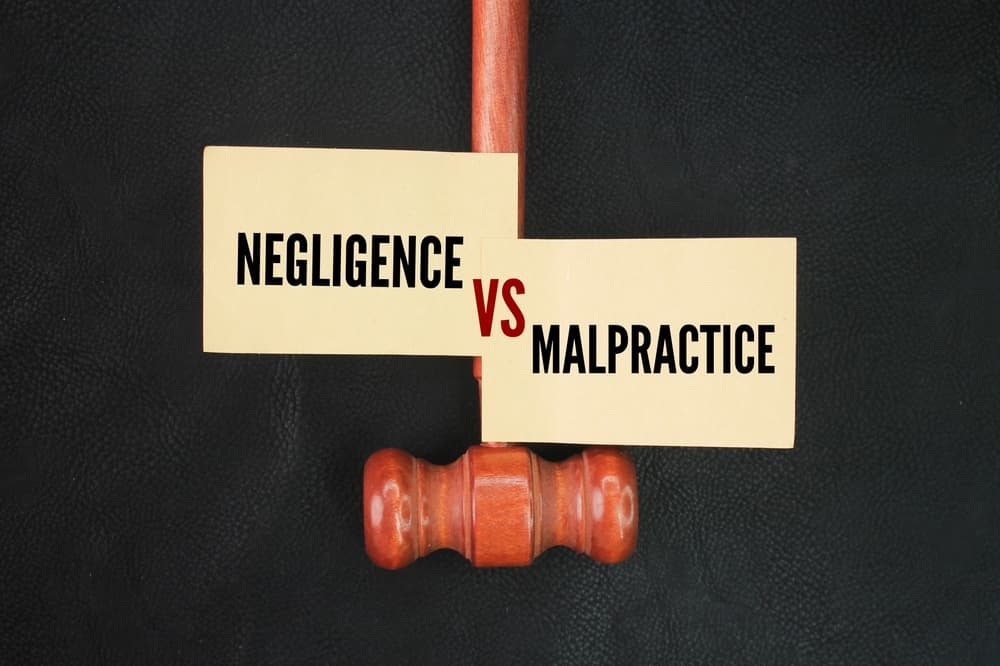
At its heart, negligence is about a failure to be careful enough, resulting in harm to someone else. The law requires every person to act with "reasonable care" to avoid injuring others. When someone fails to meet this basic obligation, and their failure causes an accident or injury, they can be held legally responsible. This principle applies to countless situations we encounter every day, from driving on the Queensboro Bridge to walking through a grocery store in the Bronx.
To better understand this, think of it as a four-part test. For a claim of negligence to be successful, a person must be able to demonstrate four specific things:
- Duty of Care: This is the legal responsibility one person has to another. For example, every driver on the road has a duty to operate their vehicle safely and follow traffic laws to protect other drivers, pedestrians, and cyclists.
- Breach of Duty: This occurs when the person fails to live up to their duty of care. A driver who runs a red light or a property owner who ignores a broken, hazardous step has breached their duty.
- Causation: This is the direct link between the breach of duty and the injury. The injured person must show that the other party's carelessness was the actual cause of their harm.
- Damages: This refers to the actual losses suffered because of the injury. This includes measurable costs like medical bills and lost wages, as well as non-economic harm like pain and suffering.
These four elements form the backbone of nearly all personal injury cases, providing a framework for establishing accountability when carelessness leads to injury.
What Makes Malpractice Different? A Higher Standard of Care
Malpractice is a more specific category of negligence. It occurs when a licensed professional—like a doctor, nurse, dentist, or lawyer—causes harm to a patient or client by failing to perform their duties with the level of skill and care expected within their profession. The key difference is the "standard of care."
For a typical negligence claim, we ask: "What would a reasonably careful person have done?" For a medical malpractice claim, the question becomes: "What would a reasonably competent professional in the same field have done under similar circumstances?" This is a much higher and more specific standard. A bad outcome alone isn't enough to prove malpractice. The central issue is whether the professional deviated from the accepted standards of their practice.
For instance, a surgeon leaving a sponge inside a patient is not just a simple mistake; it's a clear failure to meet the established standard of care for surgeons. This type of error falls squarely into the category of medical malpractice. While most commonly associated with healthcare, malpractice can also apply to other licensed professionals.
Some common situations that can lead to a medical malpractice claim include:
- Misdiagnosis or Delayed Diagnosis: Failing to correctly identify a condition like cancer or heart disease when a competent doctor would have.
- Surgical Errors: Operating on the wrong body part, leaving a foreign object inside a patient, or causing unnecessary nerve damage during a procedure.
- Medication Mistakes: Prescribing the wrong drug, administering an incorrect dosage, or failing to account for a known patient allergy.
- Birth Injuries: Causing preventable harm to a mother or infant during labor and delivery due to a failure to monitor fetal distress or respond to complications properly.
These examples illustrate how malpractice involves a breach of professional trust and a departure from the established practices that are meant to keep patients and clients safe.
Malpractice vs. Negligence: A Side-by-Side Comparison
While the two concepts are related, looking at their core differences can help clarify your own experience. The distinction often determines the complexity of a case and the type of evidence required to prove it.
The Standard of Care: A Reasonable Person vs. a Trained Professional
This is the most significant difference. General negligence is judged against the standard of a "reasonable person." A jury doesn't need special training to decide if it was unreasonable for a driver to be texting while driving through a busy Manhattan intersection. They can rely on common sense and shared community standards.
Malpractice, however, is judged against the professional standard of care. A jury of laypeople cannot be expected to know the proper protocol for performing a complex surgery or diagnosing a rare illness. This is why these cases are so different. The actions of the professional are compared to the accepted practices and standards of their specific field.
Proving Your Case: The Role of Professional Testimony
Because the standard of care in a malpractice case is specific to a profession, proving that it was breached almost always requires an expert witness. If you believe you were harmed by a surgeon's mistake, another qualified surgeon must review your case and testify that the first surgeon's actions fell below the accepted medical standard.
This requirement makes malpractice cases significantly more complex and resource-intensive than most general negligence claims. Finding an expert who is willing to testify against a peer can be a challenge, and their testimony is essential to explain the technical details of the case to a judge and jury. In a simple slip-and-fall case, on the other hand, evidence might consist of security camera footage and witness accounts, without the need for specialized professional testimony.
The Nature of the Relationship
Often, a malpractice claim arises from a direct professional-patient or professional-client relationship. When you hire a doctor, a dentist, or a lawyer, you enter into a relationship where that professional has a duty to provide competent care.
General negligence can happen between total strangers. The drivers involved in a T-bone accident at an intersection in Brooklyn have no prior relationship, but they still owe each other a duty to drive safely. The harm in a negligence case stems from a failure of a general duty owed to the public, while harm in a malpractice case stems from a failure of a specific, professional duty owed to a patient or client.
When Does a Bad Outcome Become Medical Malpractice?
It is crucial to recognize that an undesirable or negative result from a medical treatment does not automatically mean malpractice occurred. The human body is complex, and medicine is not always an exact science. A treatment can fail or a condition can worsen even when a doctor does everything correctly.
The legal question is not whether the outcome was what you hoped for, but whether your doctor or healthcare provider acted with the level of skill and care that a competent professional in their field would have provided. If they did, then even if the outcome was poor, it would not be considered malpractice. However, if they made a mistake that another competent professional would not have made, and that mistake caused you harm, it may be malpractice.
To help determine if an incident crosses the line from an unfortunate outcome to malpractice, consider the following questions:
- Was there a deviation from the accepted standard of care? Did the provider fail to do something they should have, like ordering a standard diagnostic test, or do something they shouldn't have, like prescribing a medication that is known to be harmful to patients with your condition?
- Did this deviation directly cause your injury? You must be able to show that your worsened condition or new injury was a direct result of the provider's mistake, not just an unavoidable progression of your underlying illness.
- Did the injury result in significant damages? Malpractice cases are complex and costly to pursue. Therefore, they are typically centered on cases where the harm is substantial, leading to significant medical costs, long-term disability, lost earning capacity, or severe pain and suffering.
Answering these questions often requires a detailed review of medical records by another medical professional, which is a key step in evaluating a potential claim. In New York, a certificate of merit must be filed in medical malpractice actions, affirming that there is a reasonable basis for the claim after consultation with a medical expert.
What to Do If You Suspect Negligence or Malpractice
If you believe you have been harmed by someone else’s carelessness, whether it was a professional or another individual, taking organized steps can help you protect your rights and gain clarity. Once you are safely home and able to focus, consider taking action to preserve important information.
- Gather All Your Documents: Collect every piece of paper related to the incident. For a medical issue, this includes all bills, test results, prescription records, and discharge papers. For an accident, it includes police reports, photos of the scene, and contact information for any witnesses.
- Keep a Detailed Journal: Write down everything you can remember about the incident and its effects on your life. Note dates, times, names of people involved, what was said, and how your injuries have impacted your daily activities, work, and emotional well-being. Memories can fade, so a written record is invaluable.
- Seek a Second Medical Opinion: If your concern is related to medical care, it is essential to be evaluated by another, independent doctor. This is not only important for your health but can also provide a professional assessment of the care you received.
These steps can provide a clearer picture of what happened and help you prepare for a conversation with a legal professional who can explain your options.
Medical Malpractice and Medical Negligence FAQs
Here are answers to some common questions that arise when trying to understand these complex legal concepts.
Is there a time limit to file a malpractice claim in New York?
Yes. In New York, the time limit, known as the statute of limitations, for filing a medical malpractice lawsuit is generally two and a half years (30 months) from the date of the malpractice or from the end of a continuous course of treatment. There are some exceptions, so understanding how this law applies to your situation is important.
Can a hospital be held responsible for a doctor's malpractice?
Sometimes, yes. A hospital can be held responsible for the actions of its employees, such as nurses or medical technicians. If the doctor is an independent contractor, the hospital may not be liable for the doctor’s actions, but it could still be held responsible for its own negligence, such as in hiring the doctor or providing inadequate facilities.
What if I signed a consent form before my medical procedure?
A signed consent form indicates that you were informed of the known risks of a procedure and agreed to move forward. However, it does not give a doctor permission to be negligent or to deviate from the professional standard of care. You never consent to incompetent treatment, so a consent form does not prevent you from filing a malpractice claim if harm was caused by a preventable error.
How much does it cost to pursue a malpractice case?
Most personal injury law firms, especially those handling malpractice cases, work on a contingency fee basis. This means you do not pay any attorney's fees unless and until they successfully recover financial compensation for you through a settlement or a court verdict. The firm advances the costs of litigation, which can be substantial in malpractice cases due to the need for expert witnesses.
Speak with an Experienced New York Personal Injury Attorney

If you or a loved one has suffered a serious injury due to someone else’s carelessness or a professional's failure to provide adequate care, you deserve answers and accountability. Understanding the difference between negligence and malpractice is the first step, but applying those concepts to your unique circumstances requires a careful and knowledgeable review of the facts.
At Queller Fisher, we focus on helping individuals and families who are facing serious, life-changing injuries. Our team of dedicated attorneys provides personalized attention and thorough preparation for every case we accept. We are committed to giving our clients the high-quality legal work and compassionate support they need.
Contact us today at (212) 406-1700 or through our online form for a free, no-obligation consultation to discuss your situation and learn more about your legal options.